
Affordable Housing: Problems and Solutions

1. The Scope of the Issue
Housing prices in North America have been increasing dramatically, driven by a lack of supply and an increasing demand. In Canada, CMHC estimates that “Canada needs about 3.5 million additional housing units by 2030 to restore affordability”. (CMHC, 2023) As stated by Josef Filipowicz, senior fellow of the Fraser Institute, “Canadians face the highest housing costs (as a share of household income) in the G7 group of developed countries.” (Filipowicz 2023) With a focus on Canada, this exploratory essay will examine the scope of the problem, along with potential supply side and demand side solutions to this issue.
2. Factors Impacting Housing Costs
2.1 Construction Inefficiency
It may shock the reader to learn that the construction industry has experienced a steady decline in efficiency for the last 50 years. When looking at various data points relating to the physical productivity of the construction industry, such as the total square footage or the number of homes built per employee, productivity has been falling since 1970. This is not a small effect. According to a working paper from the University of Chicago “value added per worker in the sector was about 40 percent lower in 2020 than it was in 1970.” (Goolsbee, Syverson, 2023) This, in contrast to the increase in worker productivity seen across many other industries, in the same time frame.
2.2 Regulation
Construction projects are subject to a vast regulatory framework that impacts the cost of housing for the end user. While many of these regulations are sensible, an understanding of the full costs of these regulations is imperative, if we are to have a clear picture of where improvements in affordability can be made. A joint study commissioned by the National Multi-family Housing Council and the National Association of Home Builders found that with respect to multi-family construction “an average of 40.6 percent of total development costs can now be attributed to complying with regulations imposed by all levels of government.” (Emrath & Walter, 2022) This, combined with rising costs of labour, materials and land add up. Each additional cost in the building process translates into a commensurate increase in rents, so that a housing project may remain financially viable for the developer.
Another major hinderance to efficiency in new home construction is protectionist housing policies, aka NIMBYism. (Not in my Back Yard) As new housing projects tend to increase densification in existing neighborhoods, this puts increased pressure on local services, increases traffic, noise, pollution, etc. Additionally, the building of lower cost affordable housing in an existing neighborhood tends to lower property values. Local residents will be naturally opposed to such projects and while this opposition is understandable, it is costly. A paper that studied the effect of wage dispersion (lack of affordable homes in a given area forcing lower income earners to live elsewhere) in cities with heavy restrictions to the creation of new housing supply found that “these constraints lowered aggregate US growth by more than 50% from 1964 to 2009.” (Hsieh & Moretti, 2015/2017)
2.3 Population
While supply growth struggles, demand pressure has been increasing at rates previously unseen. Accelerating immigration rates are creating a situation where a fast growing population, vie for a limited supply of existing housing, new construction cannot keep up and prices are pushed ever higher. According to Statistics Canada “Canada's total population growth for the first nine months of 2023 had already exceeded the total growth for any other full-year period since Confederation in 1867, including 2022, when there was a record growth.” (Government of Canada, 2023) Currently, the total immigration in Canada is nearing 500,000 new arrivals annually. Per total population, this is one of the highest immigration rates of any country in the world. As of 2022, Canada leads the G7 countries in population growth. (Singer, 2023)
A recent recommendation from Royal Bank of Canada was that an immigration rate of 2.1 percent of the total population annually will be required to sustain long-term economic growth in Canada. (RBC, 2023) This influx of people has a direct impact on housing affordability. Looking at data from Spain, between 2002 to 2012, a study published in the Journal of Regional Science and Urban Economics states that “a one percentage point increase in the immigration rate raises average house sale prices by 3.3%.” As we can see, the demand pressures on the housing market are enormous and if the construction sector is unable to keep pace, the long-term prospects for affordable housing are dim.
3. Supply Side Solutions
3.1 Modular Construction & Residential Conversions
The advancement and promotion of off-site, prefab construction techniques has the potential to dramatically increase the productivity of the construction industry. The assemblage of building components, off site, during the home building process comes with major advantages, both in terms of time savings and cost reduction. While the preparation work at the build site is progressing, building is being done simultaneously as walls, roofs and other components are assembled in a factory setting and then shipped to location. A recent study out of the Joint Center for Housing Studies of Harvard University drawing on data derived from the US Census Bureau’s Manufactured Housing Survey said of the cost advantages “The results of this analysis confirm that manufactured homes continue to offer significant cost advantages, with single-section, double-section and CrossMod manufactured homes costing 35 percent, 60 percent, and 73 percent, respectively, as much as comparable site-built homes.” (Herbert et al., 2023)
Although the popularity of manufactured, modular and prefab construction is on the rise, it still only accounts for a small portion of total construction. An industry study commissioned by the Modular Building Institute found that, in North America, approximately 6.14% of the total square footage was constructed utilizing modular construction techniques. (Modular Building Institute, 2023) Tax cuts and other incentives for developers utilizing off-site construction techniques should be considered as a way of stimulating the increased usage of these techniques throughout the construction industry. An increase in demand for this kind of manufactured home could be stimulated via reduced property tax, or other forms of tax credits, for the owners of houses built in this manner. In Canada, a policy focus on increasing the share of modular construction in the industry, seems like a necessity rather than an option, if we hope to hit CMHC’s target of 3.5 million additional housing units by 2030.
One possibility that would be able to add housing where it is needed most, is the conversion of vacant inner city office space to residential use. With the increasing popularity of remote and hybrid work, under-utilized office space has become a problem in many cities throughout North America. If this misallocated space were converted to housing, the effect would be impactful. A study by the Canadian Urban Institute found that across Canadian cities, the total convertible office space is approximately equal to 18,000 to 22,000 potential units. (CUI, 2023) These types of large scale conversion projects are technically challenging and costly for developers, as such, incentives will be needed in most cases to make these projects economically viable. Numerous incentivization options exist, from fee waivers for building permits to tax exemptions and capital grants. Policy makers would be wise to move quickly to streamline the conversion process, so as to ameliorate short-term housing costs in downtown cores.
3.2 Re-examining Regulation
Regulatory requirements impose additional restraints to the building of new housing inventory. Few would argue against basic workplace safety procedures or minimum structural standards. However, slow and expensive permitting processes, prohibitive land-use restrictions, minimum lot size and a litany of other regulations stifle the efficiency and speed of new builds and in many cases, can be the difference in whether a new housing project is undertaken by a developer at all. In the previously referenced study by the National Multi-family Housing Council and the National Association of Home Builders we have seen that on average, the cost of regulatory compliance for a multifamily development accounted for 40.6 percent of it’s total cost. Specific regulatory cost include, the costs of zoning approval, the costs of special studies required to begin site work, the costs of land required to be allocated to government use or left unbuilt, the pure costs of delays, etc. Data gathered by CMHC in a 2022 Municipal Land Use and Regulation Survey found that “Preliminary analysis from the survey shows that higher overall land use regulation seems to be associated with lower housing affordability across Canadian municipalities.” (CMHC, 2022) Given the negative impact these regulations can have on the development of affordable housing, it would be wise to undertake a deep examination of the regulatory framework and determine where improvements can be made. Streamlining the process by reducing fees, removing unnecessary or redundant regulations and focusing on expediting permitting procedures may have a dramatic impact on the ability of developers to reach the CMHC’s 2030 target.
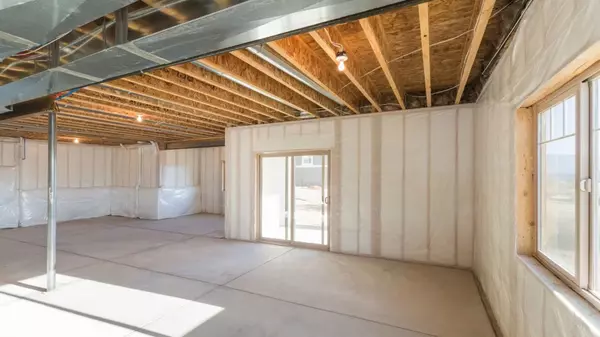
One area where re-examining regulations may be particularly helpful, is in the creation of accessory dwelling units. (basement suites, in-law apartments, etc.) Building additional housing units onto pre-existent properties is likely the most cost-effective way to add new housing to an established neighborhood. Efforts should be made to support property owners who wish to create additional rental units on their property by lowering the regulatory costs and abrogating procedural barriers. A report from the San Francisco chapter of the Urban Land Institute concluded that there are three key factors to the successful growth of additional dwelling units. (Chapple et al, 2017) One, reform zoning regulations relating to minimum lot size and floor area, along with relaxing owner occupancy requirements and minimizing design review. Two, waive utility connection and permit fees. Three, promote additional dwelling units by educating homeowners and provide technical assistance where possible. Cities that have approached the issue in this manner have seen an increase in production of these types of secondary units and this can likely be replicated in other cities via the adoption of these strategies.
3.3 Re-examining Tax Policy
A reduction in taxation on purpose-built rental properties may have a direct impact on the availability and cost of housing. Recently, increasing interest rates have diminished the economic viability of many potential housing starts. Easing high taxation rates faced by developers would mitigate this effect and help stimulate new building projects. A 1998 study found that the effects of the Canadian tax system, with regards to housing investment, was stifling growth in the rental market to a serious degree. “This conclusion of serious detrimental effects is supported by various analytical studies that have been done on the implications of Federal tax changes on the rental market. These studies demonstrate that the worsening income tax treatment of rental investment in Canada during the period starting in 1972 has had quite negative implications for the rental market.” (Canadian Federation of Apartment Associations, 1998) The paper continues, ” The literature also indicate that a return to more favourable tax treatment of rental housing investment will generate additional investment in this sector.” During the final quarter of 2023, the Canadian federal government moved to waive GST for purpose-built rental housing, this is a step in the right direction but more needs to be done.
Along with tax reductions on the building side, changes to individual tax policy relating to rental ownership would further spur investment. A 2023 memo from The C.D. Howe Institute addressed to Canada’s ministers of housing stated that one option “ would be to halve the proportion rental income included for income tax purposes, improving the after-tax return on investing in rental income properties and providing a powerful incentive for investment given the prevailing high marginal tax rates on personal income.” (Lewis, 2023) Another interesting proposal in the same document was that “The federal government could also consider a tax exemption for the capital cost recapture and capital gain on the disposition of a rental property rolled over into new investments” This would effectively incentivise real estate investors to keep their capital reinvested in the production of new rental properties, rather than pulling their investment out and being forced to pay the capital gains.
4. Demand Side Solutions
4.1 Link Immigration to Housing
Soaring demand in Canada has dramatically outpaced housing production and is putting ever increasing pressure on the existing housing stock. Canada’s current immigration policy will need to be carefully re-examined if the demand side of the housing equation is to be balanced. An economic report prepared by TD bank in July 2023 stated “We estimate that a continuation of a high-growth immigration strategy would widen the housing shortfall by about a half-million units within just two years. Recent government policies to accelerate construction are unlikely to offer a stopgap in this short time period due to the natural lags that exist in adjusting supply.” (Caranci et al., 2023) In a situation such as this, substantially lowering the immigration rate while allowing time for development to catch up would seem advisable, however, this is a classic economic trade-off. The major issue is that with an aging population and declining birthrate, over the long term, immigration will be needed to sustain economic growth in the country. However, considering the severity of the issue, a strategy that mitigates the acute problem of skyrocketing housing prices in the short-term, appears to be a higher priority than focusing on the chronic problem of sustaining GDP growth years into the future.
Ensuring that Canadian housing and infrastructure can properly accommodate the increasing population should become a policy focus, if we wish to ensure affordability. Unfettered immigration with no regard for the housing, infrastructure and societal pressures that accompany it, is clearly an unwise strategy. Linking the immigration rate to new housing development would be a sensible way to manage this issue going forward. The Housing Minister of B.C. expressed the need for such a strategy in early 2023, saying “The time has come for the federal government to actually tie immigration numbers to affordable housing targets and as well as new housing starts so we can ensure the people here have the supports for healthcare and housing, and new immigrants are supported as well,” (Zussman, 2023) Currently, growth planning strategies are not well enforced and tend not to be reflective of demand. As stated in a paper published by the Macdonald-Laurier Institute “housing supply constraints do not feature as a consideration in the federal-provincial/territorial agreements informing eventual decisions on the number of immigrants to admit in the near-term.” (Filipowicz & Lafleur, 2023) When drafting future policy relating to immigration, more thought must be given to the pressures placed on all levels of society as the total population is increased dramatically in a compressed period of time.
4.2 Regional Development and Remote Work
The bulk of Canadian immigration is heavily concentrated in a handful of large, metropolitan areas. Information from Statistics Canada has shown that "10 of Canada's 41 large urban centres have a higher proportion of immigrants than all of Canada" (Government of Canada, 2021) The adoption of a rapid regional development program in smaller cities and rural areas, and the promotion of these areas as attractive alternative destinations for newcomers, would help to alleviate the added housing demand on major metropolitan areas. A paper from the Ryerson Journal of Policy Studies, explained that immigrants settling in the largest urban areas, tend to do worse economically than those who choose to reside in smaller communities. The paper goes on to state “without stronger incentives towards Canadian regions, through dynamic attraction and settlement programs, for instance, coupled with effective job-creating policies, immigrants will most likely continue to settle (and remained trapped) in Montreal, Toronto, and Vancouver.” (Valade, 2017) Programs designed to develop smaller communities and attract incoming migrants would provide an economic boost to these areas, while simultaneously easing the burden on large urban centers.
One method of redirecting both internal and external immigration into smaller, peripheral communities worth considering, may be the implementation of incentive programs for employers and remote workers operating outside of urban centers. Tax incentives for companies that house remote workers in peripheral communities would help to drive population to these regions. Individually, remote work tax credits and grant programs for workers residing in small communities would make living in these areas more attractive. Coupled with lower housing costs, on average, as compared with urban areas, these communities may become very appealing options to remote workers. Small business incentive programs of this nature already exist throughout Canada, but tailoring a future program toward making small communities hubs for remote workers would create an additional, effective tool in promoting a more even spread of immigration throughout the country.
4.3 Non-permanent Resident Management
Canada’s total population, at the time of writing, sits at just over 41 million people. According to numbers provided by CIC News, a Canadian immigration news website, the number of non-permanent residents sits at 2.2 million, contributing 5.36% of Canada’s total population. (Robitaille & El-Assal, 2023) With regards to these temporary foreign workers, policies can be implemented to disperse these residents throughout the country and ease the pressure on major metropolitan areas. A 2006 paper studying immigration patterns and policy in Canada, recommended that offers of tax exemptions or credits could be offered to immigrants willing to settle less population dense regions, or that a more direct approach “to control settlement patterns by making admission to Canada conditional on settlement in a specified smaller urban centre.” be adopted. (Hyndman et al, 2006) Measures such as these should be considered as a possible method of relieving the demand pressure on the areas hit hardest by rising housing costs. Additionally, spreading these non-permanent residents more evenly throughout the country would benefit these lower density areas economically, speeding the process of regional development.
The creation of a regional points system may be considered as a possible technique of redistributing the population and housing demand. Setting specific targets for numbers of non-permanent residents by region, by determining which areas of the country can adequately absorb the population and benefit from the economic stimulus it provides may help to achieve this result. The implementation of thorough economic impact assessments to assign a value to a given region before determining the ideal numbers of temporary foreign workers to reside in the area, would ensure that the potential influx of immigrants, aligns with the region's capacity to provide housing and support services to the incoming population. Given that the non-resident population accounts for such a large percentage of Canada’s total population, more thoughtful management of this group could have a substantial impact on housing costs throughout the country.
5. Conclusion
There are no quick fixes to the affordable housing crisis, but a sense of urgency is needed. The projected housing demand coupled with a record high immigration rate, press the need for swift and effective intervention. In terms of supply, much needs to be done to modernize the construction industry and reduce the cost pressures on developers. This could be achieved through the promotion of modular and prefab construction techniques, coupled with regulatory and tax policy changes intended to stimulate development. With regards to the demand side of the equation, there are no solutions without trade-offs. Measures that restrict immigration now would ease the immediate demand pressure, however would be likely to have a negative effect on GDP growth in the future. In the long term, more sensible policies that reflect regional absorption capacities, in terms of housing and infrastructure, should be adopted to ensure that a balanced housing market can be achieved and sustained.
6. References
CMHC (2023) Estimating how much housing we’ll need by 2030 Available at: https://www.cmhc-schl.gc.ca/blog/2023/estimating-how-much-housing-we-need-by-2030 (Accessed: 12 March 2024).
Filipowicz, J. (2023) There are no solutions to Canada’s housing crisis-only trade-offs: Op-ed, Fraser Institute. Available at: https://www.fraserinstitute.org/article/there-are-no-solutions-to-canadas-housing-crisis-only-trade-offs (Accessed: 30 March 2024).
Goolsbee, A. and Syverson, C. (2023) The strange and awful path of productivity in the U.S. Construction Sector, University of Chicago. Available at: https://bfi.uchicago.edu/working-paper/the-strange-and-awful-path-of-productivity-in-the-u-s-construction-sector/ (Accessed: 16 March 2024).
Emrath, P. and Walter, C. (2022) 40.6 percent of the cost of multifamily development. Available at: https://www.nahb.org/-/media/NAHB/news-and-economics/docs/housing-economics-plus/special-studies/2022/special-study-regulation-40-percent-of-the-cost-of-multifamily-development-june-2022.pdf (Accessed: 31 March 2024).
Hsieh, C.-T. and Moretti, E. (2017) Housing constraints and spatial misallocation. Available at:https://www.nber.org/system/files/working_papers/w21154/w21154.pdf (Accessed: 31 March 2024).
Government of Canada, S.C. (2023) Canada’s population estimates, third quarter 2023, Statistics Canada. Available at: https://www150.statcan.gc.ca/n1/daily-quotidien/231219/dq231219c-eng.htm (Accessed: 16 March 2024).
Singer, C.R. (2023) A global migration boom has started ..., Available at: https://www.immigration.ca/a-global-migration-boom-has-started-what-are-its-implications-for-canada/ (Accessed: 16 March 2024).
RBC (2023) New 2024-2026 federal immigration targets flat amid policy ..., Royal Bank ofCanada. Available at: https://thoughtleadership.rbc.com/wp-content/uploads/Canada-immigration-numbers.pdf (Accessed: 31 March 2024).
Herbert, C., Reed, C. and Shen, J. (2023) Harvard Joint Center for Housing Studies, Joint Center for Housing Studies. Available at: https://www.jchs.harvard.edu/ (Accessed: 11 April 2024).
Modular Building Institute (2023) Permanent modular construction report, Modular Building Institute. Available at: https://mbimodularbuildinginstitute.growthzoneapp.com/ap/CloudFile/Download/LwYRWRzp (Accessed: 12 April 2024).
The case for conversions (2023) Canadian Urban Institute. Available at: https://canurb.org/wp-content/uploads/The-Case-for-Conversions-FINAL.pdf (Accessed: 17 March 2024).
Approval delays linked with lower housing affordability (2023) CMHC. Available at: https://www.cmhc-schl.gc.ca/blog/2023/approval-delays-linked-lower-housing-affordability (Accessed: 03 March 2024).
Chapple, K. et al. (2017) Jumpstarting the market for accessory ..., Terner Center. Available at: https://ternercenter.berkeley.edu/wp-content/uploads/pdfs/Jumpstarting_the_Market_--_ULI.pdf (Accessed: 23 March 2024).
Economic impact of federal tax legislation on the rental ... (1998) Clayton Research Associates Ltd. Available at: http://neighbourhoodchange.ca/documents/2014/09/clayton-1998-tax-and-rental-housing.pdf (Accessed: 26 March 2024).
Lewis, B. (2023) No Time for Half Measures: Tax Policy Options to Grow Rental Housing, C.D. Howe Institute. Available at: https://www.cdhowe.org/sites/default/files/2023-08/IM%20B%20Lewis%20August%2028%202023_0.pdf (Accessed: 25 March 2024).
Caranci, B., Orlando, J. and Sondhi, R. (2023) Balancing Canada’s pop in population, Balancing Canada’s Pop in Population. Available at: https://economics.td.com/ca-balancing-Canada-population (Accessed: 11 April 2024).
Zussman, R. (2023) B.C. Housing minister calls on Ottawa to tie housing funding to immigrant arrivals, Global News. Available at: https://globalnews.ca/news/9385437/b-c-housing-minister-calls-on-ottawa-to-tie-housing-funding-to-immigrant-arrivals/ (Accessed: 11 April 2024).
Filipowicz, J. and Lafleur, S. (2023) Getting our houses in order: How a lack of Intergovernmental Policy Coordination Undermines Housing Affordability in Canada: MacDonald-Laurier Institute, Macdonald-Laurier Institute. Available at: https://macdonaldlaurier.ca/getting-our-houses-in-order-how-a-lack-of-intergovernmental-policy-coordination-undermines-housing-affordability-in-canada/ (Accessed: 30 March 2024).
Government Of Canada, S.C. (2022) Infographic 610 of Canada’s 41 large urban centres have a higher proportion of immigrants than all of Canada, 10 of Canada’s 41 large urban centres have a higher proportion of immigrants than all of Canada. Available at:https://www150.statcan.gc.ca/n1/daily-quotidien/221026/g-a006-eng.htm (Accessed: 11 April 2024).
Valade, M.Y. (2017) 34 trapped in the Big City? re-thinking regionalization of ..., Ryerson University. Available at: https://www.ryerson.ca/content/dam/policystudies/journal/2017/Valade-Trapped-in-the-Big-City-5.pdf (Accessed: 12 April 2024).
Robitaille, E. (2023) Canada’s non-permanent resident population is 2.2 million people, CIC News. Available at: https://www.cicnews.com/2023/09/breaking-canadas-non-permanent-resident-population-is-2-2-million-people-0939670.html#gs.79y339 (Accessed: 11 April 2024).
Hyndman, J., Schuurman, N. and Fiedler, R. (2006) Size matters: Attracting new immigrants to Canadian cities, York University. Available at:https://jhyndman.info.yorku.ca/files/2017/01/Size.pdf (Accessed: 12 April 2024).
Categories
Recent Posts










CONTACT ME FOR MORE INFORMATION